
Listen to the AI generated podcast on this article:
The Rise of AI Agents in the Enterprise #
In the fast-paced world of modern business, AI agents have moved from being experimental tools to essential components of daily workflows. From HR automation to customer support and IT operations, these agents are streamlining processes and boosting productivity. 🚀 But with this rise in power and integration comes a hidden danger — the risk of privilege escalation and security vulnerabilities that are often overlooked. 🔐
AI Agents: Powerhouses of Automation #
AI agents are designed to be efficient and scalable, often operating with broad access permissions to interact with multiple systems and users. This allows them to perform tasks that would otherwise take hours for humans to complete. 🤖 For example, an HR agent can automatically provision or deprovision user accounts across various platforms, while a customer support agent can pull customer data and resolve issues without human intervention. 📈
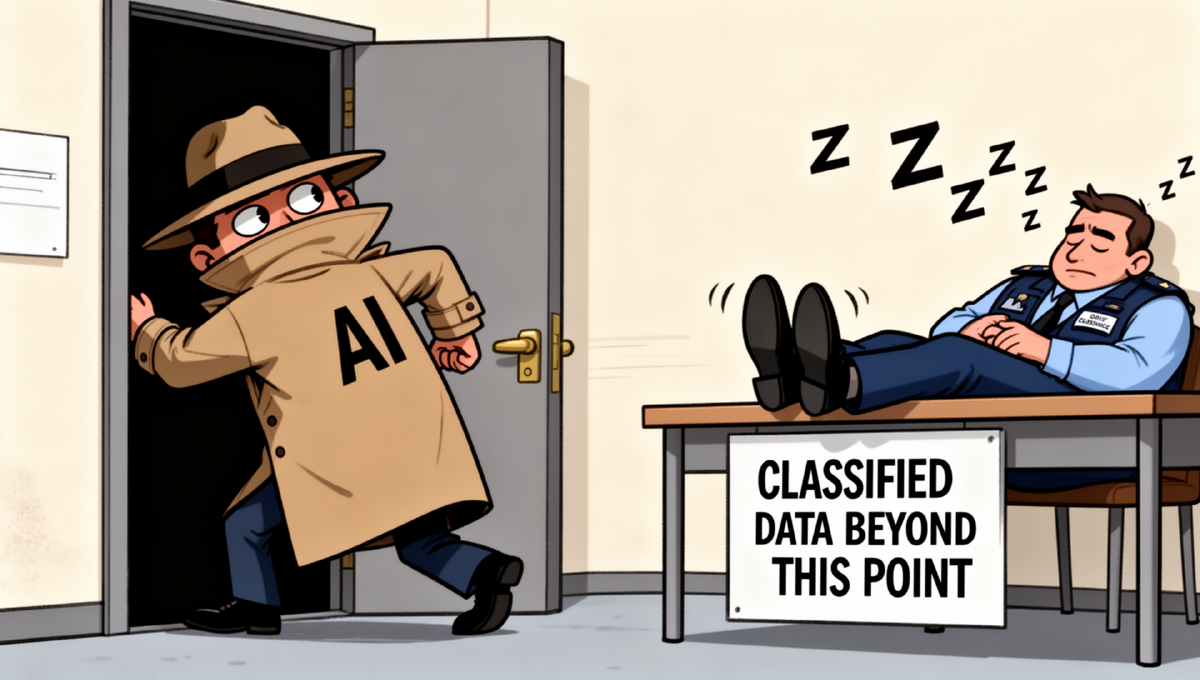
However, these agents are not just tools — they are now powerful intermediaries that can bypass traditional access controls. 🛡️
Breaking the Traditional Access Control Model #
Traditional access control models are built around human users and their individual permissions. But when an AI agent executes an action on behalf of a user, the authorization is evaluated against the agent’s identity, not the user’s. 🧭 This creates a situation where a user with limited access can indirectly trigger actions or retrieve data they would not be authorized to access directly. 🤯
For instance, a user with limited access to financial systems may ask an AI agent to “summarize customer performance.” The agent, with broader permissions, pulls data from various platforms, returning insights that the user would not be authorized to view. 📊 This kind of privilege escalation can occur without clear visibility or accountability. 🔍
The Hidden Risks of Agent-Centric Workflows #
These risks are not just theoretical — they are quietly embedded in the everyday workflows of enterprises. An engineer without production access may ask an AI agent to “fix a deployment issue,” and the agent could modify configuration in production environments and trigger a pipeline restart, all without the user ever touching production systems. 💻
The danger here is that no explicit policy is violated. The agent is authorized, the request appears legitimate, and existing IAM controls are technically enforced. But the access controls are effectively bypassed, creating unintended and often invisible privilege escalation. 🛑
The Need for Visibility and Control #
As AI agents take on more operational responsibilities, security teams must gain clear visibility into how these agents interact with critical assets. It’s essential to understand who is using each agent and whether there are gaps between a user’s permissions and the agent’s broader access, creating unintended privilege escalation paths. 📈
Without this context, excessive access can remain hidden and unchallenged. Security teams must also continuously monitor changes to both user and agent permissions, as access evolves over time. This ongoing visibility is critical to identifying new escalation paths as they are silently introduced. 🔍
Embracing AI Agents with Confidence #
AI agents are here to stay, and they are becoming some of the most powerful actors in the enterprise. They automate complex workflows, move across systems, and act on behalf of many users at machine speed. But that power becomes dangerous when agents are over-trusted. 🚨
Secure agent adoption requires visibility, identity awareness, and continuous monitoring. Tools like Wing provide the required visibility by continuously discovering which AI agents operate in your environment, what they can access, and how they are being used. 🛡️
With the right tools and strategies, organizations can embrace AI agents confidently, unlocking AI automation and efficiency without sacrificing control, accountability, or security. 🌐
The Future of AI and Security #
As we move into the future, the integration of AI into enterprise workflows will only deepen. But with this comes a responsibility to ensure that these agents are not just tools of productivity, but also guardians of security. 🔒
The possibilities are endless, but we must remain vigilant. What if AI agents could not only automate tasks but also detect and prevent security threats in real-time? What if they could act as the first line of defense in an enterprise’s cybersecurity strategy? 🌟
The future is bright, but it’s up to us to ensure that it’s secure. 💡
Sourced from this article at The Hacker News